
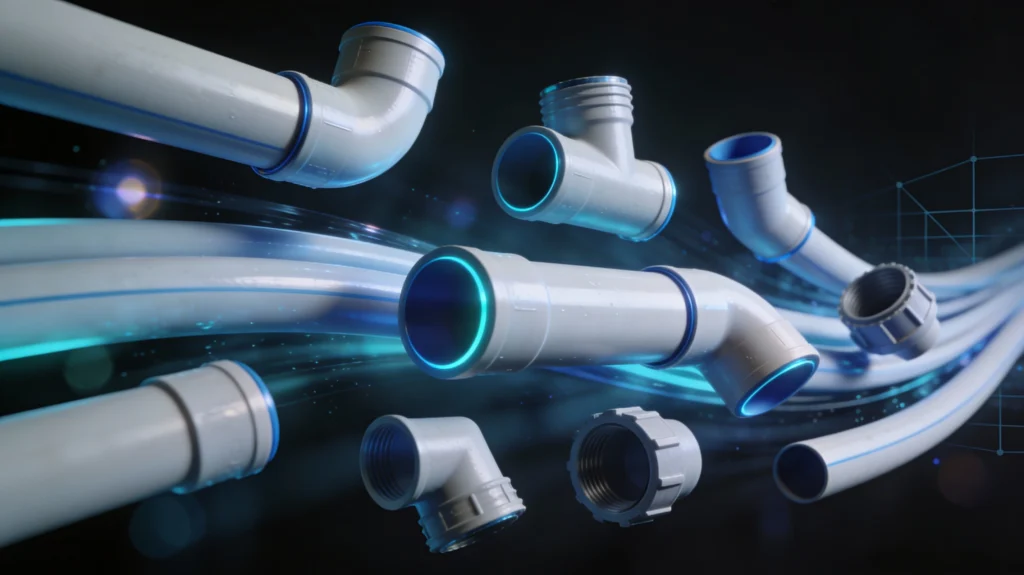
PVC (Polyvinyl Chloride) pipes have become one of the most widely used piping solutions in both construction and industrial sectors. Known for their durability, affordability, and versatility, PVC plastic pipes, joints, and fittings play a crucial role in modern infrastructure.
What Are PVC Pipes?
PVC pipes are manufactured from high-quality plastic polymers designed to handle water, chemicals, and other fluids efficiently. They are lightweight yet strong, making them easy to transport, install, and maintain compared to traditional metal pipes.
PVC systems usually include:
- PVC pipes
- PVC joints
- PVC fittings such as elbows, tees, couplings, and reducers
Together, these components create a secure and leak-resistant piping network.
Key Advantages of PVC Pipes
1. Durability and Long Life
PVC pipes are resistant to corrosion, rust, and chemical reactions. This makes them ideal for long-term use in harsh environments, including industrial facilities and underground installations.
2. Lightweight and Easy Installation
Compared to metal pipes, PVC pipes are much lighter. This reduces labor costs, speeds up installation, and minimizes the need for heavy equipment.
3. Cost-Effective Solution
PVC piping systems are affordable without compromising on quality. Their long lifespan and low maintenance requirements help reduce overall project costs.
4. Chemical and Moisture Resistance
PVC plastic pipes can safely carry water, chemicals, and waste materials without degradation, making them suitable for industrial processes and drainage systems.
5. Smooth Flow Performance
The smooth inner surface of PVC pipes minimizes friction, ensuring efficient fluid flow and reducing the risk of blockages.
Applications in Construction
In the construction industry, PVC pipes and fittings are commonly used for:
- Water supply systems
- Drainage and sewage lines
- Electrical conduit systems
- Plumbing installations in residential and commercial buildings
Their reliability and ease of use make them a preferred choice for contractors and engineers.
Applications in Industrial Use
PVC pipes are also widely used in industrial environments, including:
- Chemical processing plants
- Manufacturing facilities
- Irrigation systems
- Wastewater and effluent management
PVC joints and fittings allow for flexible system design, enabling easy expansion or modification when needed.
Why Choose PVC Pipes?
PVC piping systems offer a perfect balance of performance, safety, and affordability. With proper installation, they provide a dependable solution that meets international quality standards and supports sustainable construction practices.
Conclusion
PVC plastic pipes, joints, and fittings are essential components in modern construction and industrial projects. Their durability, resistance to corrosion, and cost efficiency make them a smart investment for long-term infrastructure needs. Whether for residential plumbing or heavy industrial use, PVC pipes deliver reliable performance you can trust.